In most sports, a broken wrist means a trip to hospital. In squash, coaches talk about it all the time. Nik Rasula, a long-standing SquashSkills member in Canada, asked Jethro Binns what it means, and the answer became a 10-lesson playlist: How To Use Your Wrist In Squash.
Your wrist decides whether you hit the ball straight, how much pace you get, how much spin you put on it and how late you can change your mind.
What A Broken Wrist Means In Squash
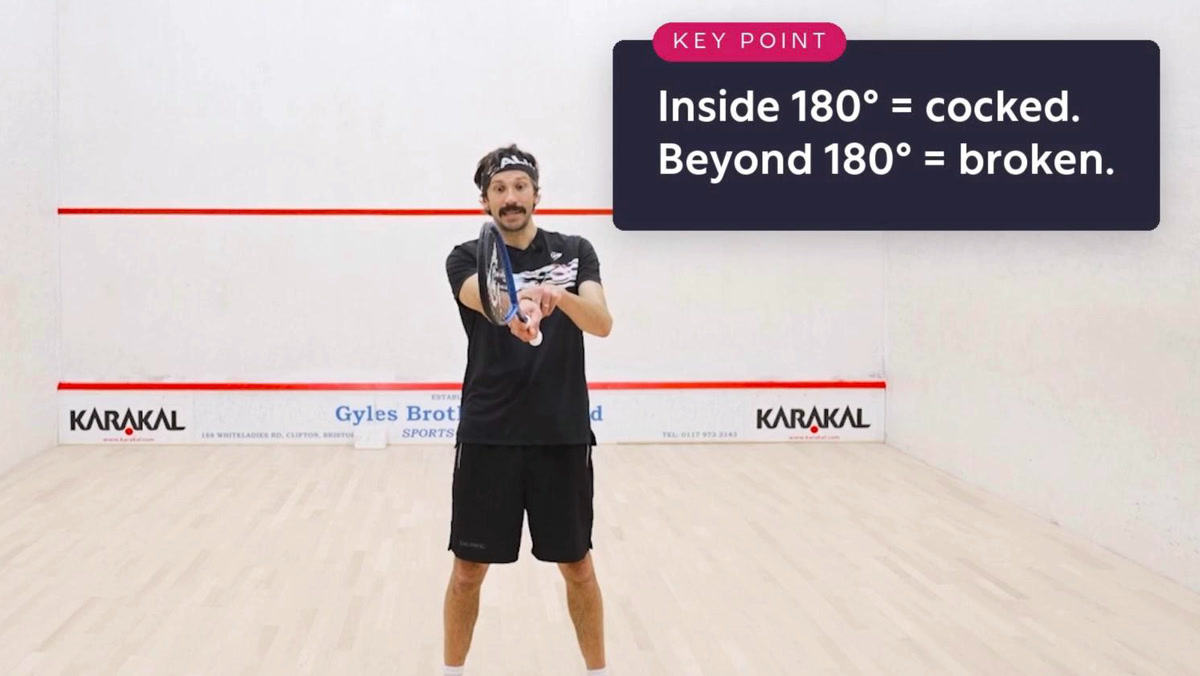
In his backhand wrist lesson, Jethro uses a simple measure. Look at the angle between your forearm and the racket. Anything inside 180 degrees is a cocked wrist, whether the racket is up high or down low. Go beyond 180, to 190, 200 or 220 degrees, and the wrist is broken.
A broken wrist sends the racket head pointing at the side wall. To hit the ball straight from there you have to compensate with your upper body, and the usual result is a ball dragged into the middle. With the wrist cocked, shoulder, elbow, wrist and racket head line up at impact and the strings meet the ball square.
The Cocked Wrist On The Forehand
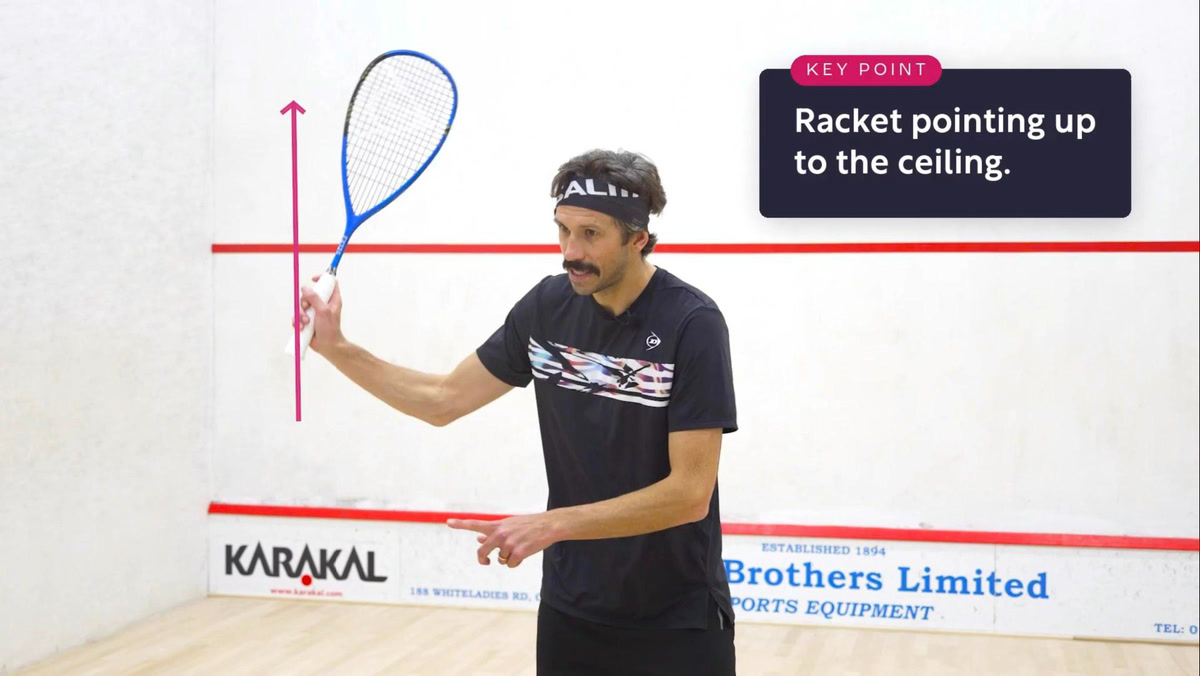
Around 10 to 15 years ago there was a fashion for a flatter forehand wrist. Peter Nicol used to talk about laying the wrist. Coaches such as Rodney Martin and Rob Owen have since brought the game back to the cocked wrist, with the racket pointing up at the ceiling as you prepare.
Jethro points to the Australians for the cleanest ball strikers: Rodney Martin, Stewart Boswell and Cameron Pilley all set the wrist early. “It was like a loaded gun,” he says, and they hit through it the same way time after time.
The cocked position does two things. The racket is above the ball, so you naturally come down on it, which is where the threat comes from. And it lets the elbow lead the swing with the wrist following, so there’s a snap at the end. With a flat wrist, the wrist leads the elbow and that snap is gone. Jethro’s example is Paul Coll, who compacted his swing with Rob Owen and became, in Jethro’s words, devastating at the front of the court with his drops and his punch down the line.
The Backhand: Straight Drives And The Back Corner
The same fundamentals carry over. Cock the wrist, the racket head lifts above the ball, and you can come down the back of it with the racket face perpendicular to the side wall. That’s how you hit straight consistently. It’s also what holds the backhand diamond together: drop the shoulder, drop the elbow, the racket comes up, and the swing becomes repeatable.
The wrist matters most when the ball gets behind you. If someone attacks your deep backhand and your wrist is broken, you’re lucky to get a boast away. With a strong wrist you can snap through and drive the ball straight from a long way behind you, or cut a boast in when straight isn’t on.
Where Your Pace Comes From
The cocked wrist doesn’t stay locked for the whole swing. You hold it to the point of impact and then let it go to generate pace. Lock it all the way through and the shot is controlled but slow. Release it through the hitting zone and you can hear the difference in the sound off the strings.
Jethro reckons releasing the wrist adds around 18% more pace than keeping everything locked. On the backhand the wrist stays a little firmer, with a smaller release at the end, which is one reason most players hit harder on the forehand.
Spin, Touch And Topspin
Control of the racket head comes from the wrist, and so does your adaptability. Jethro runs through the different ways to use it. Ball tight to you? Carve inside out. Reaching out wide or on a high volley? Come round the outside of the ball. Low and flat? Cut straight down the back of it. Each one uses the wrist to put bite on the ball.
To show the effect of spin, Jethro plays the same short ball flat, without the wrist, and it’s slow and pushy. With a bit of cut it gets into the front corner faster and dies sooner. If you’re working on the front of the court, that lesson pairs well with our guide to a better short game.
Topspin goes the other way. Drop the racket head low, swing low to high and roll the wrist over the ball. Jethro used it through the middle against players hitting hard from the back: take it early and soft, and drag them all the way to the front. He’s clear it’s an extra, not your bread and butter, but it’s worth having.
Using The Wrist For Deception
Most deception comes down to the wrist working late. For a trickle boast, shape up to hit straight, then drop the wrist at the last moment and the ball goes round the front corner. For a hold, you need the wrist loaded in the cocked position, so you can snap and turn the ball across court at the last second. Jethro picks out Victor Crouin as exceptional at this on the forehand.
Speed is what catches the opponent out. Do everything else right but play the last part slowly and they’ll have time to react. There’s more on the body position and timing behind it in our blog on the fundamentals of deception.
Read Your Opponent’s Wrist
The wrist tells you what’s coming, and Jethro gives reading your opponent’s wrist a lesson of its own. Put the ball deep into your opponent’s backhand corner and watch them. If they’re scrabbling with a broken wrist, they can boast or flick the ball up slowly, so you can take a higher position on the T and look for the volley. If their racket is up above the ball with the wrist cocked, they have options, and you need to cover them.
Against a weaker player struggling in the back corner, a floppy wrist usually means a ball that catches the side wall or comes into the middle. Combine their wrist with where the ball is and how they’re standing, and you’ll be in position early for the next shot. Our guide to reading the game covers the rest of that picture.
Two Drills To Test Your Wrist
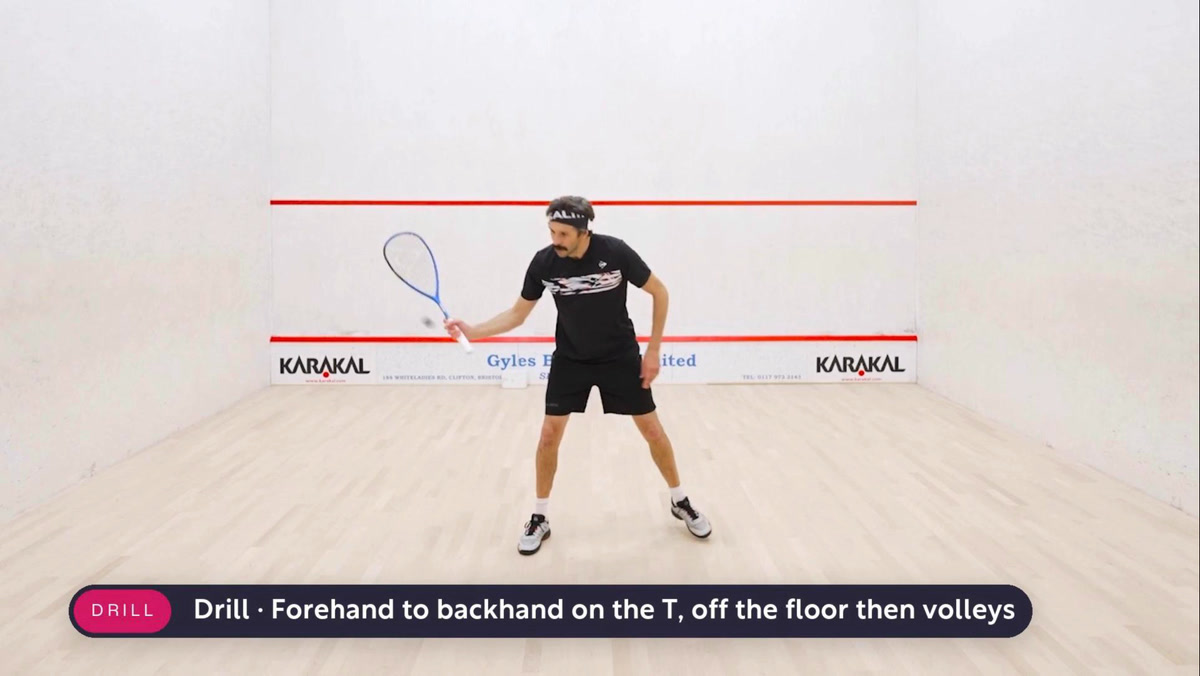
This is the drill from the end of the backhand lesson. Stand on the T and hit forehand to backhand, keeping the ball on a straight path, first off the floor and then on the volley. You have to reset the cocked wrist on every shot, with the thumb finishing on one side and then the other. Without a good wrist position, it’s very hard to keep going.
Then feed yourself and play kills, coming down the back of the ball. With a broken wrist you can’t stun the ball in, so you’ll know straight away. If it still isn’t working, Jethro’s advice is to see a coach and work out what’s going on.
All 10 lessons are in How To Use Your Wrist In Squash, with demonstrations of each shot. Start with the drill on the T and see how long you can keep it straight.
Watch: How To Use Your Wrist In Squash With Jethro Binns
10 lessons on the cocked wrist, pace, spin, deception and reading your opponent, with drills to test your wrist position. Suited for players at 500+ on SquashLevels.
Watch Now